
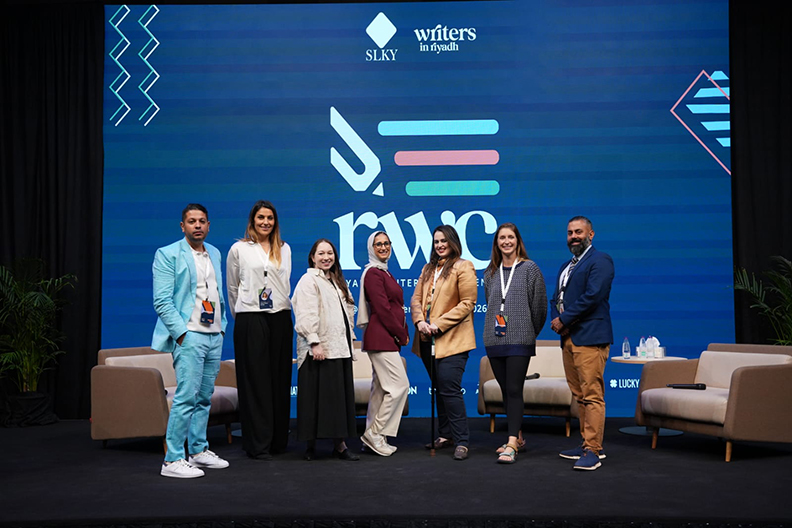
The inaugural Riyadh Writers Conference took place on 6 and 7 February 2026 at the British International School Al Waha campus, bringing together over 120 writers, poets, publishers, illustrators, photographers and thinkers from across the globe for two days of programming dedicated to the craft and business of writing. A pre-conference mixer was held on 4 February at Beast House, giving attendees an early opportunity to connect before the formal programme opened.
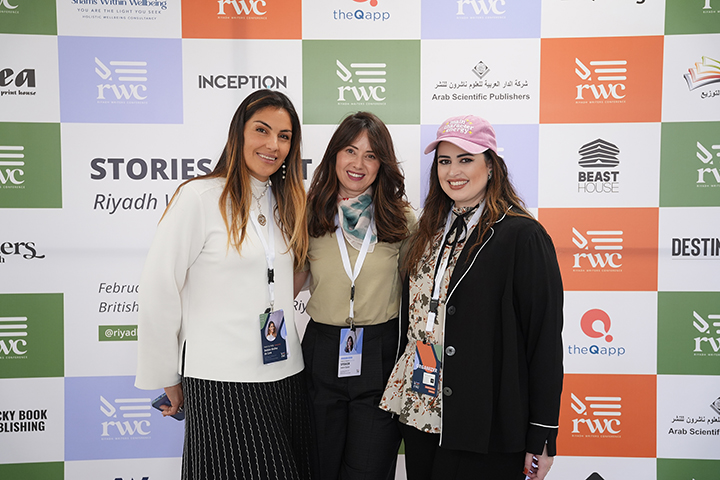
The conference was co-founded by Lubna Ahmed-Haque and Mariana De’ Carli Ortí, both of whom actively participated in the programming over the two days. An organising committee was formed to create an event for the community, with authors Elie B. Hart and Deborah Munoz de Cote, Shams Within Wellness founder Ayaz Rehman, DQ Living columnist Mohammed Ameen, lawyer Madison Siroishka, graphic designer Farheen Zafar, and photographer Arslan Khan.
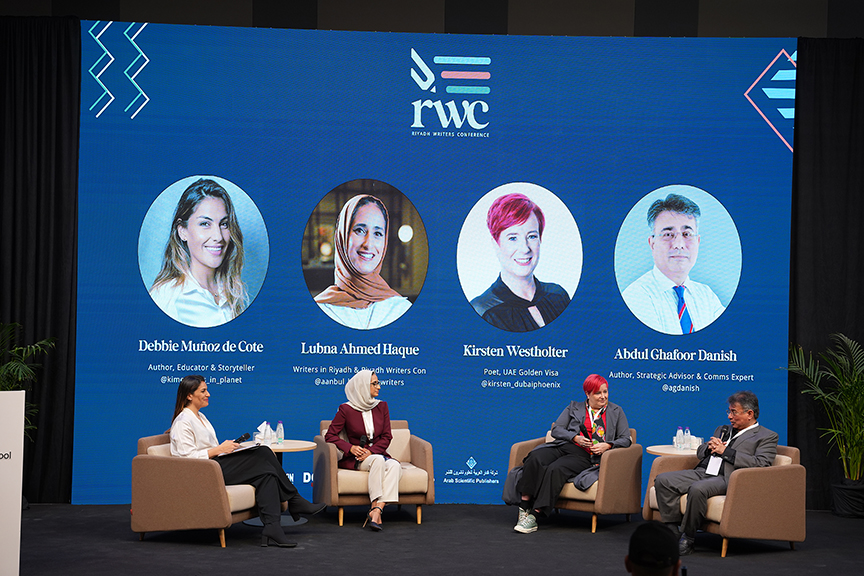
The event ran three simultaneous streams, covering writing craft, the publishing industry and creative inspiration, giving attendees the opportunity to curate their own experience across a dense schedule of panels, presentations and workshops. The opening session was delivered by A.G. Danish, a traditionally published Indian author and visiting professor at the London School of Business, whose keynote on writing from the heart set the tone for the days ahead. His address drew on the conviction that authentic storytelling begins with personal truth, and his delivery drew one of the warmest responses of the conference.
Among the most affecting moments of the programme was a presentation by Sudanese author Leena Magdi, whose poetic memoir on grief and loss moved the audience to tears. Her session demonstrated the reach of personal narrative when handled with precision and honesty, and attendees cited it as one of the conference’s standout moments.
The sessions spanned an impressive geographic range. Award-winning British author Hiba Noor Khan appeared alongside Inda Ahmad Zahra from Malaysia on a panel that drew on their contrasting publishing paths and readership experiences. Dubai-based poet Kirsten Westholter contributed thoughts on regional opportunities for authors to publish works in their own voices. Workshop streams included Italian author Giada Angeli, who spoke on nonfiction writing as a vehicle for personal inspiration, tracing the journey from lived experience to published work. Spanish communications professional and author Laura Opazo delivered a presentation on book marketing that drew directly on her background as a senior PR practitioner, giving writers a grounded, practical framework for building visibility for their work.
Canadian publisher Lucky Publisher brought a full panel of authors to the conference, including Samantha Moonsammy, Shelley A. Murdoch, Lyrique Richards and Simar Nounou, all of whom spoke to their experiences working within the Canadian publishing landscape and the realities of reaching international readerships as independently published authors. Meanwhile, Dina AlZibedh, founder of Al Maya Publishing, addressed new authors on the traditional publishing landscape for Arabic-language children’s books, offering a sector-specific coaching session covering what publishers look for, how the market is structured, and where the current opportunities lie. Her session was among the most practically focused of the programme and drew a strong turnout of aspiring authors.
The conference also included a writing competition and structured opportunities for authors to pitch directly to publishers, features that gave the event a tangible professional dimension beyond the panel discussions. For writers at the earlier stages of their careers, those sessions represented direct access to decision-makers that is rarely available in the region.
Running alongside the conference programming, a marketplace showcased a diverse range of creatives, from illustrators to renowned Saudi photographers, giving attendees a space to engage with the wider creative community and discover work across disciplines. The marketplace added texture to the event, reinforcing that the conference positioned itself not only as a writers’ gathering but as a meeting point for the broader creative sector.
Attendees consistently commented on the diversity of speakers, backgrounds and topics across the two days. The programme drew participants who travelled from across Saudi Arabia and the wider Gulf region. Attendees included authors based in NEOM Bay to Dubai. The mix of traditionally published, independently published and self-published voices across the sessions gave the programming a breadth that avoided the narrower focus common to industry conferences of this kind.
For its first edition, the Riyadh Writers Conference laid a solid foundation. The combination of craft-focused programming, industry access, a competitive element and a creative marketplace gave it a structure that attendees and speakers alike noted as coherent and well-considered. A second edition next year is expected.