

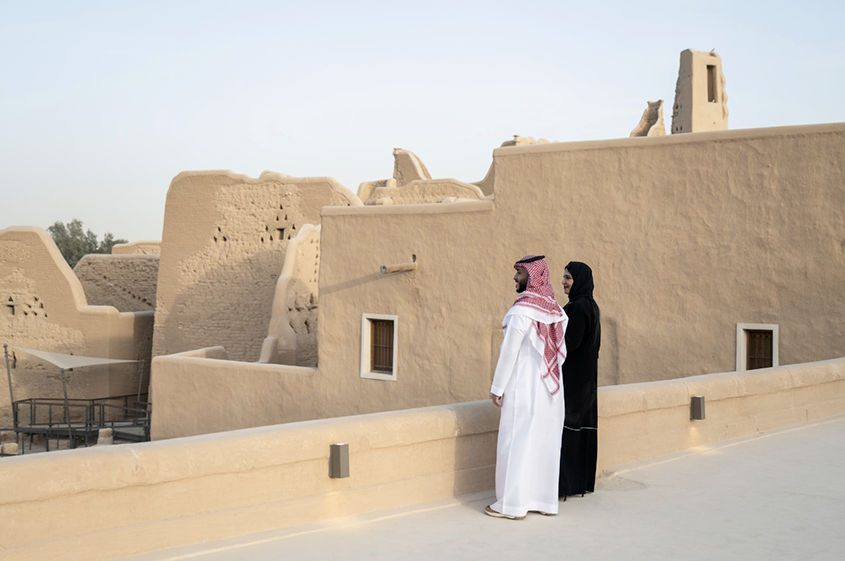
When we travel or relocate to a new country, we tend to observe differences that spark questions like ‘Why do locals here dress a certain way?’, ‘Why is the manager in my new office addressed as Sir’, ‘Why do people leave a meter-long gap while queuing’, ‘Why is it okay to arrive 10 minutes late into a board meeting?’.
We notice, we compare, and without realizing it we interpret everything through our own cultural lens. When something doesn’t align with what we’re used to, we tend to label it as inefficient, inappropriate or even ‘weird’.
But what if these behaviors aren’t random at all?
Looking beyond what’s visible
Cultural Intelligence (CQ) is the ability to understand, relate to, and adapt across different cultural contexts, without rushing to judgement. While people across the world share many similarities, navigating a new environment on ‘common sense’ alone rarely works. After all, what’s common for me may not be common for you!
So, what shapes the way people behave across cultures, almost on autopilot mode? For instance, in India the concept of ‘Jugaad’ is commonly used to find workable solutions with available resources. It’s a household term to come up with a quick fix – be it mending a kitchen appliance or launching services with minimal budgets. Values such as Jugaad are embedded in how Indians learn to approach problems over time.
This applies everywhere. Each culture has its set of values that people grow up being conditioned to. What we see on the surface – language, dress, food, symbols are only a small part of the picture. Beneath it are deeper drivers that influence how people communicate, make decisions, build trust, and respond under pressure. These are rarely visible to someone new, yet they explain much of the ‘why’ behind everyday interactions.
In Saudi Arabia, a few key patterns and underlying values can help understand the cultural context better:
Religion: Religion plays an integral role in the way of life. It reflects in the daily calls for prayer, modest clothing, food preferences, holiday calendar, common expressions, gender sensitivities and other social norms. Taking time to learn about it by reading, learning Arabic phrases, interacting with locals are some ways to build your CQ. In my experience, it’s less about ‘getting it all right’ and more about showing respect and the willingness to learn.
Building trust: Building trust often happens outside formal settings. Conversations may begin with personal connection before moving into business, and relationships tend to develop over time rather than through transactions alone. For many of my clients, their relationships with Saudi teams noticeably improved after in-person visits to the Kingdom. And more so, when they stayed back for the weekend and watched a football match together!
Hierarchy: Decision-making isn’t always immediately visible. Influence and authority can sit in places that aren’t obvious at first glance. It’s important to identify the decision makers and build visibility early on.
Time: The approach to time can feel more fluid with a pace that differs from what you might be used to. Providing clear guidance and following up can be helpful; whether it’s for a work deliverable or even setting up Wi-Fi in your new home. Don’t be surprised if the courier guy arrives at 11:30 pm or your Saudi friends laugh at your dinner invite that mentions an end time!
Generosity: Acts of generosity can be unexpectedly large and deeply genuine. For many newcomers, this can be both heartwarming and overwhelming. Extending meal invitations, organising and covering the cost of shared activities or hobbies, bringing back gifts from travels are some ways to reciprocate the hospitality. What really matters is about deepening the friendship through quality time and connection.

Why a checklist doesn’t work
It’s tempting to look for a list of ‘dos and don’ts’ when entering a new culture. But culture is rarely that straightforward. It’s layered, often shaped by personality, generation, upbringing, education, global exposure, and individual experiences. Two people in the same city, workplace, or even family may approach situations very differently.
This is why cultural awareness alone isn’t enough.
Cultural Intelligence is a highly underrated capability. This is why cultural awareness alone isn’t enough. It’s about having the tools to navigate pressure and ambiguity, the ability to read a room across multicultural settings, building trust where norms contradict and adapting without losing your identity.
Before arriving in the Kingdom, you may have heard about how Saudi Arabia is undergoing a significant socio-cultural transformation. And yet, somewhere along the way, you may find yourself thinking, “I wish I understood what’s really going on here”, that’s exactly where deeper cultural understanding begins…