

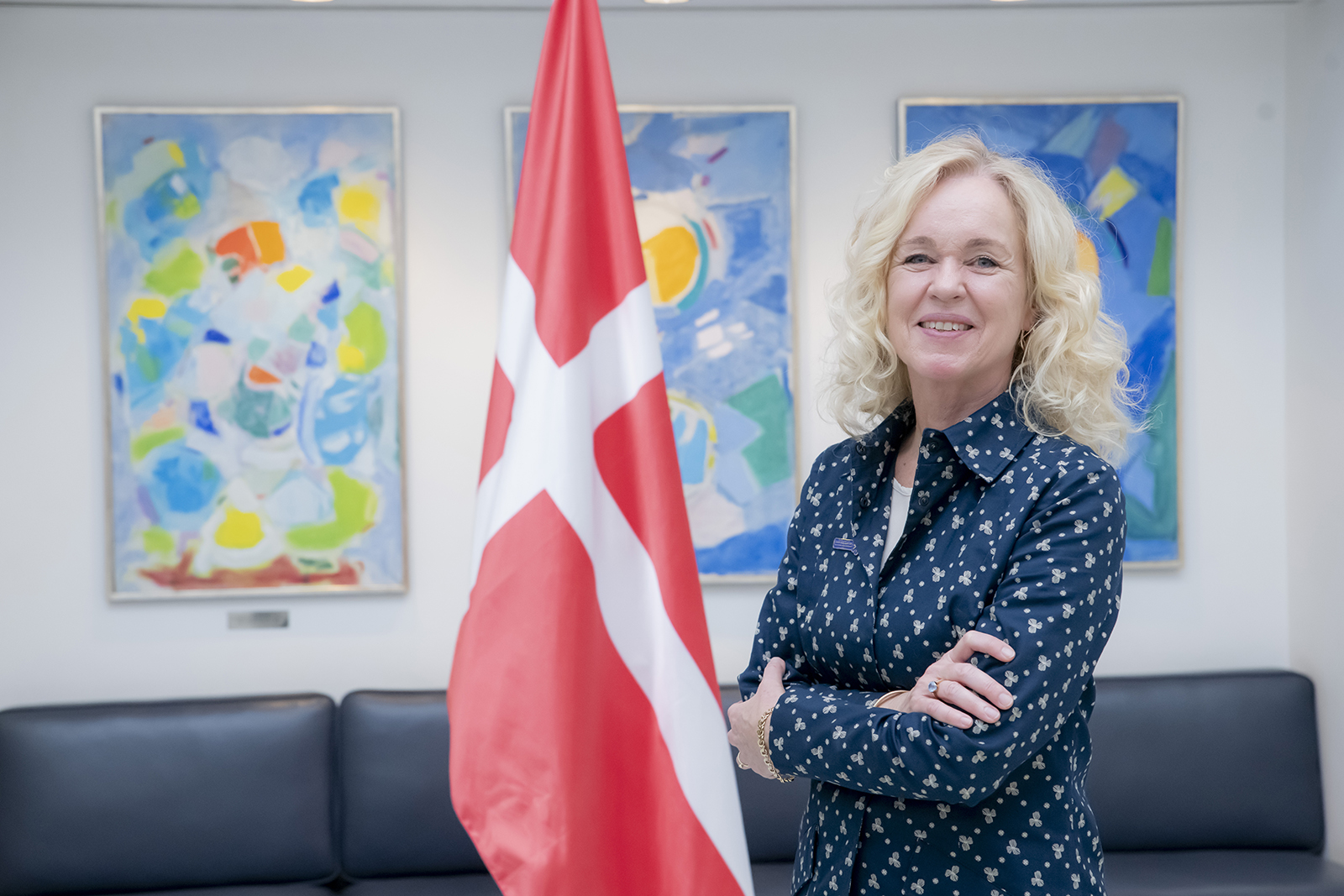
From the University of Copenhagen at the Danish Embassy
Some stars shine brightly in the sky, while others twinkle in our hearts. Then there are those connected by an invisible thread, illuminating both the heavens and our souls simultaneously. One such star once flared brightly over Riyadh and was reflected in the heart of a young Danish girl, Anja, who was experiencing the wonders of space for the first time through a telescope her parents had gifted her.
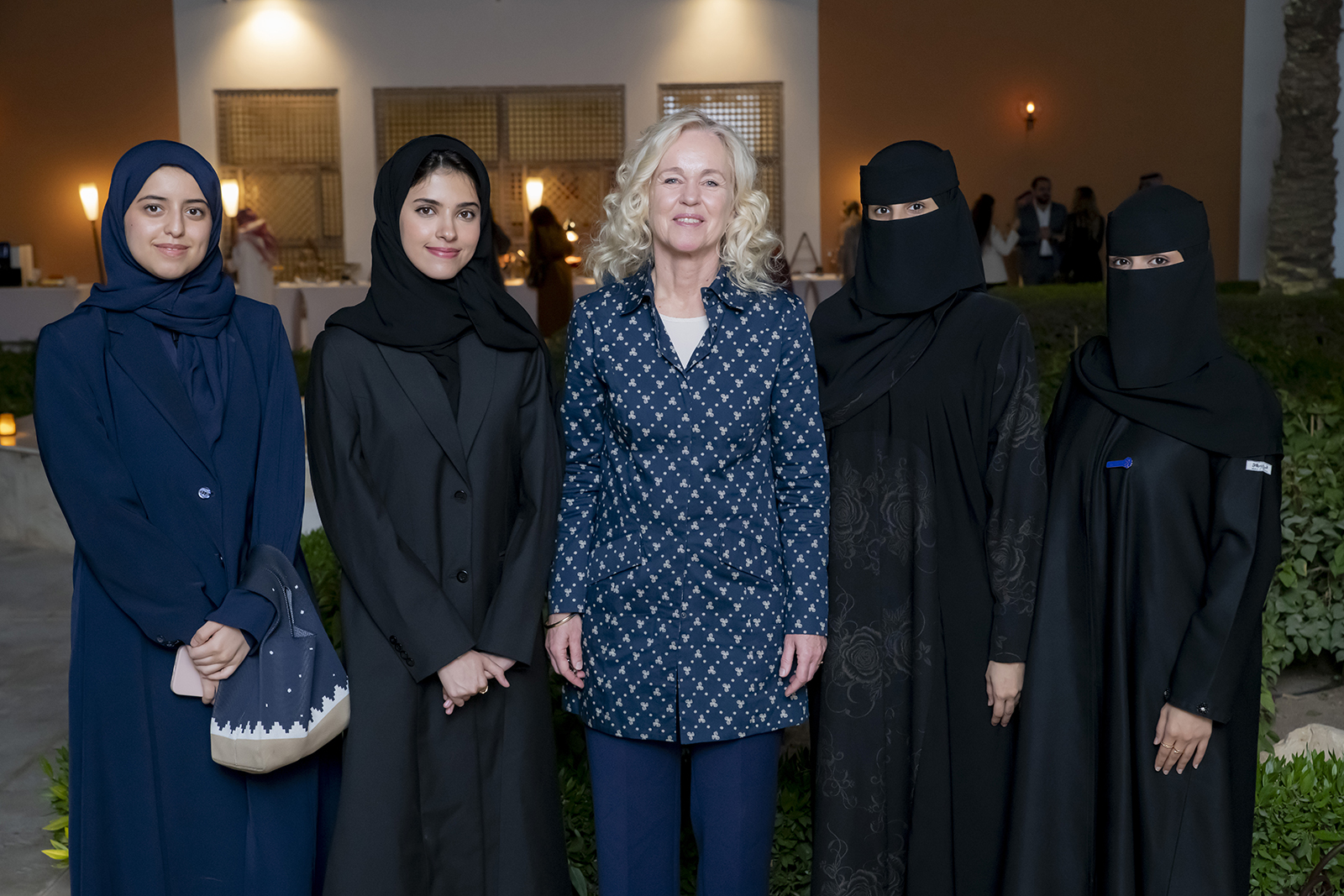
Today, Professor Anja C. Andersen is a renowned astrophysicist and science communicator at the Niels Bohr Institute in Denmark. She investigates cosmic dust and its crucial role in the formation of complex molecules, stars, and planets. She travels the globe, educating people about the significance of astrophysics and STEM fields. One of her recent journeys, organized at the invitation of Ambassador Liselotte Plesner, brought Professor Andersen back to Riyadh, where it all began. DQ Living seized the chance to meet with Professor Andersen and delve into the fascinating world of astrophysics and its importance in our lives.
Please discuss the importance of public engagement methods to enhance awareness in relation to the intersection of physics, chemistry, geology, and biology.
Engaging the public in discussions about STEM topics is crucial because these subjects have a significant impact on people’s health and their everyday decisions. When individuals lack understanding or awareness of these topics, they are less likely to make informed choices in their lives. To navigate life effectively, it’s essential for everyone to have at least a general knowledge of STEM. This is why I frequently visit schools to engage with young people and teach them the basics of STEM. My goal is to inspire more students to pursue these fields. Unfortunately, we are witnessing a decline in the number of students interested in studying physics or chemistry, even as countries and companies increasingly need highly qualified specialists in these areas. Additionally, I find it incredibly rewarding when young people make informed decisions about their futures. I believe that the world thrives when individuals pursue their passions and utilize their strengths. Therefore, I aim to share my enthusiasm for STEM with the youth and enjoy the process of guiding them along the way.
How did the stars over Riyadh spark your interest in relation to Saudi Arabia?
My passion for space and astrophysics began in Saudi Arabia. I lived in Riyadh with my parents for two years and attended Riyadh International Community School. One day, they gifted me a telescope, which I used to observe the stars at night. That’s how my passion was ignited. Riyadh and Saudi Arabia became integral parts of my journey as an astrophysicist.
When Ambassador Liselotte Plesner invited me to give this lecture, I was thrilled to return to where it all began. Saudi Arabia is a unique destination for astrophysicists, enjoying around 300 clear nights a year, compared to just 50 in Denmark. Furthermore, the weather in Saudi Arabia is far more favorable for stargazing than Denmark’s long, rainy days (laughing).
Looking back, I appreciate my time at Riyadh International School even more. Interacting with people from different cultures at an early age was a tremendous advantage. As an astrophysicist today, I connect with colleagues from around the world, over 10,000 astrophysicists – collaborating to transform big ideas into reality, step by step. In this context, my international experience and understanding of diverse perspectives greatly facilitate our work. I owe much to Saudi Arabia for shaping me into a global citizen.
What do you think is the significance of astrophysics for Saudi Arabia, which is rapidly moving toward its transformation?
The essence of human existence lies in curiosity and questioning. Our desire to understand the stars, our place on Earth and in the cosmos, and the ultimate meaning of existence drives development and progress. This growth leads to technological advancements, including the creation of telescopes and satellites, as well as advancements in physics, mathematics, and chemistry, all of which inspire national progress and prosperity. Moreover, while black holes, galaxies, and planets are not essential to our lives on Earth, they also significantly shape our aesthetic perception of the world. Personally, my interest in astrophysics was sparked by the incredible beauty of the night sky; what I observed was truly an aesthetic wonder. To illustrate the catalyst for development, I often reference Denmark. The Stone Age in Denmark didn’t end due to a shortage of stone, but because someone decided that we could achieve something different and better. This shift in thinking exemplifies how astrophysics is crucial for transforming the country, as it fosters curiosity and encourages innovative perspectives.
What law of astrophysics can or should be applied in everyday life by every person to make the world around us a better place?
We shape the Earth, and in turn, the Earth shapes us, as humans. It’s crucial to remember, especially in today’s reality, that our planet is unique. Many mistakenly believe that if we end up making Earth a less favorable place to be, we can move to “Planet B” – another planet where we could continue to live. However, that “Planet B” has yet to be found. Even if we discover a habitable place elsewhere, I can bet that there will be living creatures there who won’t want to share their planet with us. I’d like to share a Chinese proverb that often comforts me when I travel and miss my children: “The sky belongs to both rich and poor.” When I look at the sky, I know my children are sharing the Moon with me, and that brings me solace. So, let’s cherish our home, appreciate what we have, and share everything on planet Earth – without chasing speculative and elusive ideas about moving our existence to another planet.