

Named after a historically significant mountain in central Norway – a place few originate from but many can visit – Snøhetta is a transdisciplinary, dialogue-driven practice that encompasses architecture, landscape architecture, interior design, art, product design, and graphic and digital design. With the Royal Diriyah Opera House well underway, I recently had the opportunity to meet with Eli Synnevàg, Director of Acquisition and Business Development for the Middle East and Africa, at the Royal Embassy of Norway to discuss Snøhetta’s legacy in the Kingdom of Saudi Arabia.
Ithra has become a symbol of modernism and futurism in the center of the traditional Kingdom of Saudi Arabia. What was the source of inspiration behind this architectural marvel?
In 2007, we [Snøhetta] were invited to participate in an international competition where Aramco announced an ambitious project: the establishment of a new cultural complex in the Kingdom. This complex, unlike anything that had existed before, aimed to offer creative opportunities for Saudi youth – a gift from Aramco. Since its inception, Snøhetta has worked on cultural projects, viewing culture as an interplay of dialogue, trust, and coexistence. This vision inspired the concept of a Roman arch for Ithra, which we represented through pebbles, with the keystone holding the structure together. If even one pebble were to fall, the entire structure could collapse. In essence, collaboration and interdependence served as the foundation for Ithra’s inspiration. We recognized that this idea and its final design would be a bold statement for the traditional Kingdom, but we felt it was the right time to push boundaries from within. Our dialogue with the Aramco team was fruitful, and they embraced the concept fully, supporting us every step of the way until the building’s opening. Some Aramco team members even relocated to Oslo for an extended period to work closely with us and help bring this vision to life. We had an enriching experience collaborating with Saudi experts during a time when face-to-face interaction was crucial, especially before the era of digital meetings.
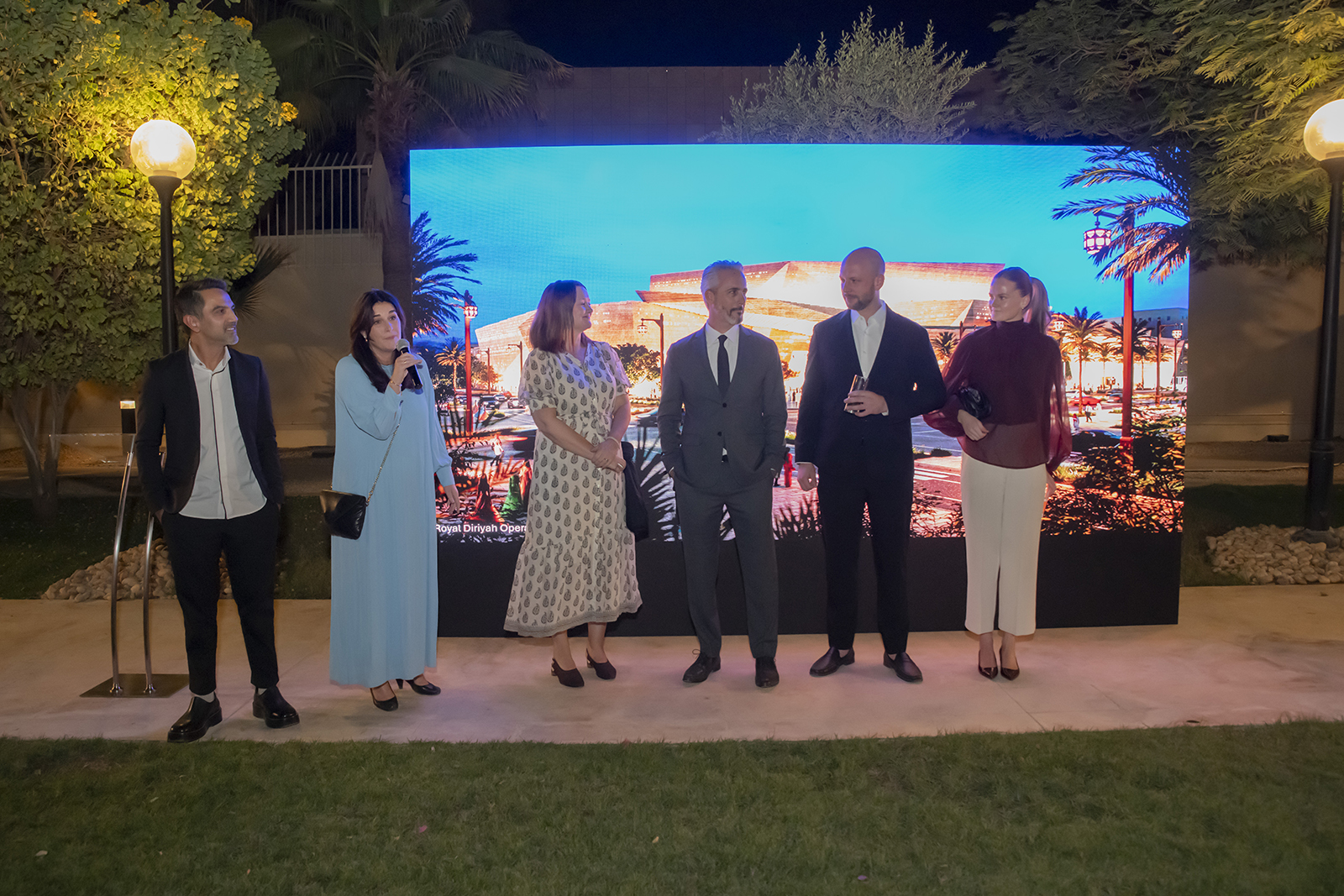
The Royal Diriyah Opera House is the second grand project of Snøhetta in Saudi Arabia. How do you envision connecting Saudi traditions with opera and Norwegian know-how?
What is truly inspiring about Saudi Arabia today is how Saudis are embracing their history and traditions. They value their vernacular environment and heritage. At Snøhetta, we always start our projects by exploring the site and its surroundings. We consider the context and seek out all available information, a process that inspired the Royal Diriyah Opera House to return to its roots. We envision the Opera House as a “village” – a cluster of different elements rather than a single building. This mirrors the essence of opera, where various sounds come together to create a masterpiece for generations. Our design also takes into account the specific environmental and climatic conditions to ensure that the building is sustainable and comfortable. We applied historical insights from Saudi Arabian housing construction, reinterpreted through a modern lens. Thus, the Royal Diriyah Opera House is poised to become a symbol of collaboration and creative architecture, harmonizing knowledge and tradition.
Reflecting on Snøhetta’s transdisciplinary practice, let’s discuss the significance and integrity of the arts in shaping future communities both within and beyond Saudi Arabia.
At Snøhetta, we aim to eliminate any barriers that might impede our ability to design and construct enduring structures. To accomplish this, we draw on the expertise of professionals from diverse fields and backgrounds. Bold ideas can only be realized through collaboration among like-minded individuals who are willing to work across disciplines. Success hinges on people relinquishing their preconceptions and being open to learning and inspiration from one another. This embodies our vision of transdisciplinary practice.
What are your concluding reflections on Riyadh and the Diplomatic Quarter?
The Diplomatic Quarter stands out as one of the most serene and well-maintained areas in the Kingdom. Life here flows smoothly and comfortably for both locals and visitors. In contrast, Riyadh undergoes constant transformation. Each visit reveals a new building, road, or bridge. I believe this juxtaposition of tranquility and dynamic change makes Saudi Arabia truly unique.