

An Exclusive Conversation
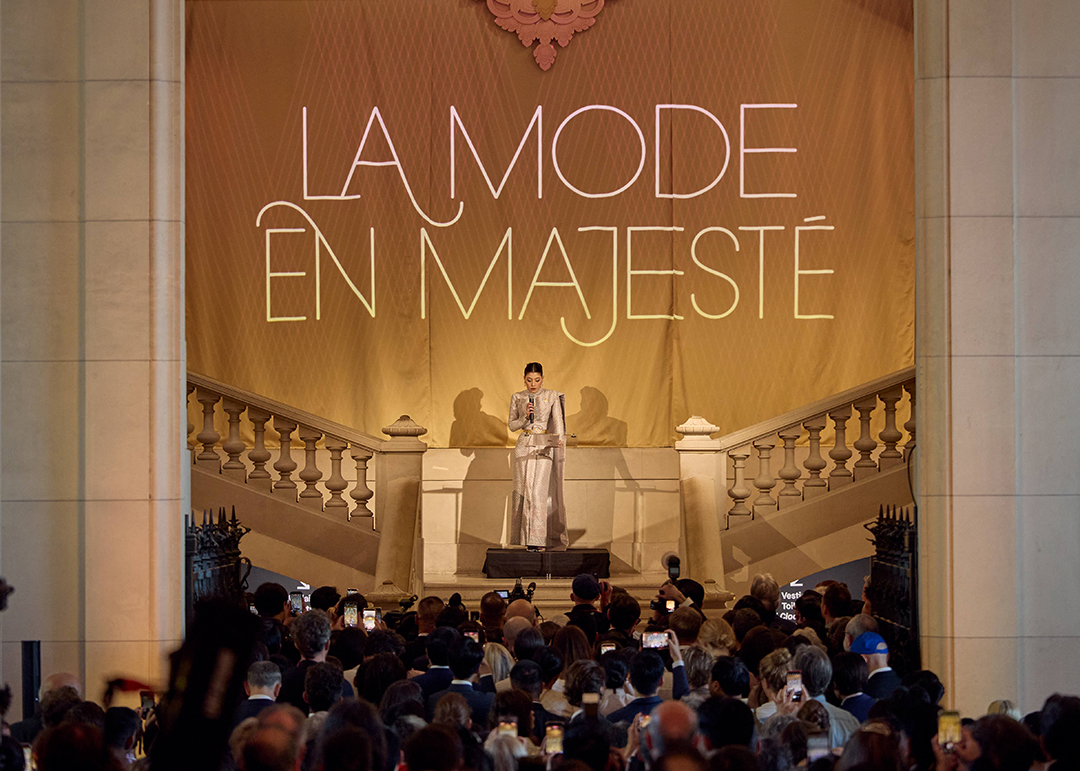
In an era when diplomacy increasingly extends beyond government chambers and official communiqués, culture has emerged as one of the most powerful instruments of international engagement. Few recent initiatives have demonstrated this more elegantly than La Mode en Majesté: Royal Thai Dress from Tradition to Modernity, the landmark exhibition presented under the patronage of Her Royal Highness Princess Sirivannavari Nariratana Rajakanya at the Musée des Arts Décoratifs in Paris.
Held as part of the celebrations marking the 170th anniversary of formal diplomatic relations between Thailand and France, the exhibition represents far more than a showcase of extraordinary fashion and craftsmanship. It is a celebration of shared history, artistic dialogue, and the enduring friendship between two nations whose cultural exchanges have enriched one another for centuries.
The significance of the occasion was reflected in the remarkable gathering of distinguished guests who attended the opening celebrations. During my time in Paris, I had the privilege of speaking with numerous diplomats, government officials, cultural leaders, and influential figures whose presence underscored the importance of the event. Among them were Catherine Pégard, France’s Minister of Culture, H.E. Mr. Jean-Claude Poimboeuf, French Ambassador to Thailand, senior members of the Thai government led by Prime Minister Anutin Charnvirakul and members of his cabinet, prominent business leader Nualphan Lamsam, representatives of UNESCO, members of the diplomatic corps and leading figures from the worlds of fashion, art, and culture.
What emerged repeatedly throughout these conversations was a shared appreciation for the role of cultural diplomacy in strengthening international relationships. At a time when nations seek new ways to foster understanding and cooperation, exhibitions such as La Mode en Majesté demonstrate how culture can transcend language, politics, and geography. Through artistry, craftsmanship, and storytelling, they create opportunities for genuine connection and mutual respect.
At the center of this remarkable undertaking stands Her Royal Highness Princess Sirivannavari Nariratana Rajakanya – a designer, equestrian, patron of the arts, and passionate advocate for Thailand’s cultural heritage. Over the past two decades, she has established herself as one of Thailand’s most influential creative voices, consistently championing traditional craftsmanship while embracing innovation and contemporary design.
The exhibition itself reflects that philosophy. Spanning seven galleries and featuring more than two hundred objects, it traces the evolution of Thai royal attire from the 1960s to the present day. Visitors encounter the celebrated creations of Pierre Balmain and Maison Lesage commissioned for Her Majesty Queen Sirikit the Queen Mother, alongside contemporary interpretations by leading Thai designers and the Princess’s own atelier. Yet beneath the beauty of the garments lies a deeper narrative: the story of fashion as a vehicle for national identity and diplomacy. Indeed, the exhibition pays tribute to the extraordinary legacy of Queen Sirikit, whose elegant appearances during state visits helped introduce Thai textiles, craftsmanship, and culture to international audiences. Through her partnership with French haute couture houses, she demonstrated that fashion could serve not merely as personal expression, but as a powerful symbol of national pride and cultural exchange.
HRH Princess Sirivannavari has embraced that legacy while charting her own path. Through her support of local weaving communities, traditional artisans, and sustainable craftsmanship, she continues to ensure that Thailand’s rich cultural heritage remains vibrant and relevant for future generations.
During our exclusive conversation, the Princess reflected on the vision behind La Mode en Majesté, the enduring influence of Her Majesty Queen Sirikit the Queen Mother, and the unique role fashion plays in fostering dialogue between cultures.
Your Royal Highness, as the patron of “La Mode en Majesté,” what personal vision did you bring to shape this exhibition for an international audience in Paris?
I wanted the exhibition to present Thai dress first and foremost as our national heritage, but also as an expression of our unique culture, craftsmanship, and identity. Paris was the ideal place to share this story internationally because it is widely regarded as the world’s fashion capital and has long served as a meeting point for artistic and cultural exchange.
On a personal level, France holds a special place in my heart. It is a country deeply loved by my grandmother, Her Majesty Queen Sirikit the Queen Mother, and one that I have come to regard as a second home. Bringing this exhibition to Paris felt particularly meaningful because it allows us to celebrate not only Thai culture, but also the longstanding friendship between our two nations.
Through the exhibition, I hope visitors gain a deeper appreciation of the extraordinary savoir-faire behind Thai textiles, embroidery, weaving, and royal attire. Every piece reflects generations of knowledge and craftsmanship. Equally important is my commitment to supporting local weaving communities throughout Thailand. Preserving traditional knowledge is not only a cultural responsibility but also an economic one, ensuring sustainable livelihoods for artisans and their families.
My grandmother always taught us that true elegance comes from authenticity. Inspired by her example, I hope that traditional Thai dress will one day be recognized internationally with the same immediate cultural significance as Japan’s kimono or India’s sari.
This exhibition presents Thai dress as both fashion and diplomacy. How do you see clothing functioning as a “language” between cultures today?
For me, clothing is a form of communication because it speaks for us even before we say a word. It tells others something about who we are, where we come from, and what we value. In that sense, fashion is indeed a language – one that transcends linguistic barriers and creates immediate visual connections.
It is also an extraordinarily powerful diplomatic tool. My grandmother demonstrated this beautifully during her state visits in the 1960s, when she introduced Thai silk and Thai craftsmanship to audiences around the world. Through her wardrobe, she showcased Thailand’s cultural identity with elegance and confidence.
Today, fashion continues to create meaningful dialogue between people and cultures. It encourages curiosity, appreciation, and understanding. Whether through textiles, craftsmanship, or design, fashion offers a universal platform through which nations can share their stories and celebrate their individuality while building connections with others.
The exhibition traces the evolution of Thai royal attire from the 1960s to today. In your view, what defines the balance between preserving tradition and embracing modernity in Thai fashion?
For me, balance means preserving the essence of tradition while allowing it to evolve naturally with contemporary life. Heritage cannot remain static; it must continue to inspire new generations while remaining true to its foundations. Thai textiles embody centuries of wisdom, artistry, and cultural memory. However, younger generations must also see these traditions as relevant and adaptable if they are to survive. This is why innovation is so important. We must find ways to incorporate traditional craftsmanship into contemporary design while respecting its origins.
My grandmother understood this perfectly when she helped establish the eight forms of Chud Thai. She preserved the authenticity of Thai dress while making it practical and accessible for modern life. I strive to follow that example by supporting artisans, encouraging innovation, and promoting sustainable design practices. At the same time, preserving heritage requires more than craftsmanship alone. It also involves education, marketing, and creating economic opportunities that allow traditional communities to thrive in a modern world.
Her Majesty Queen Sirikit played a pivotal role in modernizing Thai court dress. How has her legacy influenced your own creative philosophy as a designer?
What I admire most about Her Majesty is that her vision always extended far beyond aesthetics. She understood that fashion could create opportunities, preserve cultural heritage, and improve lives. For decades, she supported weaving communities across Thailand, ensuring that traditional skills were preserved while creating sustainable livelihoods for rural artisans. She recognized that culture is strongest when it benefits the people who sustain it. That philosophy has profoundly influenced my own work. It is an immense honor to continue her royal initiatives in my own way. Through fashion, I hope to preserve traditional craftsmanship while encouraging its continued evolution. Heritage should never be confined to museums alone; it should remain a living, dynamic part of contemporary society. Ultimately, I believe the greatest tribute we can pay to our cultural traditions is to ensure they remain relevant, respected, and valued by future generations.